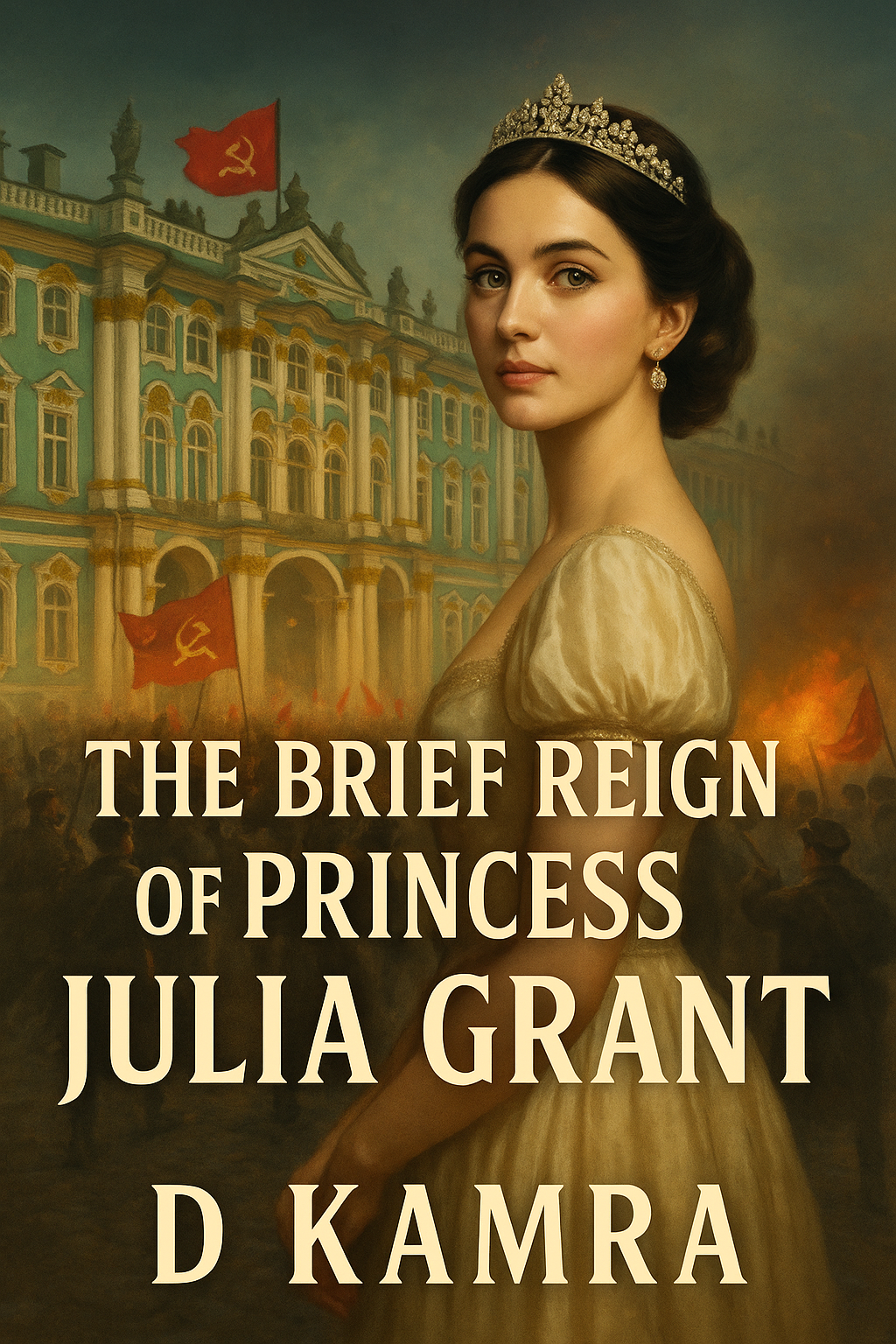
Inspired by the true story of the granddaughter of President Ulysses S. Grant, a woman who traded American aristocracy for the imperial court of St. Petersburg, only to watch an empire fall around her.
A sweeping epic of love, war, and revolution, spanning four decades and two continents.
Historical Fiction · Coming Soon
The Brief Reign of Princess Julia Grant
A Novel of Empire and Ambition
Inspired by the true story of Julia Grant, granddaughter of President Ulysses S. Grant, this novel traces one woman's amazing journey from American aristocracy to Russian nobility. At the peak of her powers, she discovers that status, titles, and wealth are only illusions when history turns. This epic story of love and war spans four decades, two continents, a war, and a revolution.
Born in the White House, Julia Grant seems destined for a life of privilege. But her charmed childhood ends abruptly. Her father's scandals and failed ventures destroy the family fortune, leaving Julia determined to reclaim the status she believes is her birthright.
Refusing to fade into obscurity, she reinvents herself abroad, captivating a handsome Russian cavalry officer with a notorious history, marrying into a noble line, and dazzling the imperial court of St. Petersburg as a celebrated Princess and Countess.
But empires, like fortunes, are fragile things. Behind the grandeur, she faces a darker truth. The serfs on her husband's Ukrainian estate live in bondage similar to the slavery that her grandfather had fought a war to end. When World War I erupts and the communist revolution sweeps Russia, Julia's elegant life crumbles.
Desperate to cling to her titles and wealth, she risks everything. She sends her young children on a dangerous journey across Siberia and the Pacific while she stays behind in the futile hope of saving her estate from the mobs. As the Red Army closes in, she and the prince attempt to flee with precious jewels stitched into the seams of her clothing.
From the Author
Author's Note
How a pandemic, a biography, and a single Russian name led to this book.
A few years ago, as the pandemic began to fade, I decided to catch up on my reading. History has always been my favorite subject, a way of understanding the present by looking through the long lens of the past. I started with Grant, Ron Chernow's sweeping biography of Ulysses S. Grant, the Civil War general who tried, with stubborn determination, to stitch a broken nation back together.
Before I could finish the book, another war intruded on the present. In 2022, Russian tanks rolled into Ukraine. I realized, with some embarrassment, how little I knew about the history of that region. To fill the gap, I turned to War and Peace, Leo Tolstoy's monumental novel about Russia in the 1800s. It was an ambitious, perhaps pretentious, pairing of books. Yet although they could not be more different, both tell stories of societies tested by war: the American Civil War and Napoleon's march eastward. To my surprise, I tore through them side by side.
Grant emerged from Chernow's biography as far more than a victorious general. As president, he pushed the nation toward the eradication of slavery. He was also, above all, a devoted family man. One passage in the book caught my attention. It described his eldest son, Frederick Dent Grant, who sometimes "put on airs, trading on his father's name." Curious, I began digging further into Fred's life and discovered something remarkable: his daughter, Julia, had married a Russian prince and moved to St. Petersburg, where she became known as Countess Speransky.
Speransky. The name seemed oddly familiar.
In War and Peace, Tolstoy describes the real historical figure Mikhail Speransky, a brilliant reformer who rose from humble origins as a village serf to become the most trusted adviser to Alexander I of Russia. He then went on to abolish serfdom in Russia, which at the time was indistinguishable from slavery.
This was too much of a coincidence to ignore. Here were two descendants of two very different men, each of whom dedicated their lives to correcting ancient injustices. A woman born into the young democracy of the United States had somehow crossed paths with a man from one of Europe's oldest aristocratic dynasties. What had drawn them together across continents and cultures? Idealism? Ambition? Were they in love so deeply that they ignored the vast distances between them? Or was it something else entirely?
I followed dozens of links down history's rabbit hole. Julia Grant was born in 1876, the year of America's first centennial, and lived nearly a century. Her life spanned the Indian Wars, the Gilded Age, the First World War, the Russian Revolution, the Second World War, and even a strange moment when American troops found themselves fighting the Red Army during the Russian Civil War. When she died in 1975, the Vietnam War was drawing to a close.
Along the way, I discovered that Julia had written three memoirs about her extraordinary life. Long out of print, they took some effort to track down, but once I found them I devoured them eagerly. Yet when I finished, I was left unsatisfied. The world she described was elegant and polite, almost untouched by hardship. Vast Ukrainian estates, glittering balls in St. Petersburg, benevolent nobles and loyal servants. It was a portrait of aristocratic life devoid of suffering.
And then, in her telling, the peasants simply rose up one day in shocking and inexplicable violence.
It left me wondering: was the granddaughter of President Grant truly blind to the poverty, resentment, and injustice around her? Or was there another story beneath the polished surface of those memoirs, a story never fully told?
This novel attempts to imagine that deeper story. It is based on the real lives of Julia Grant; her grandfather, President Grant; her father, Fred Grant; her husband, Prince Mikhail Cantacuzene, Count Speransky; and her formidable aunt, the Chicago heiress Bertha Palmer.
Where the historical record falls silent, I have filled the gaps with imagination and given voice to the people who inhabited this remarkable world. For that reason, this book must ultimately be called fiction. As someone once told me, fiction is feeling, not fact.
But the history beneath it is very real.
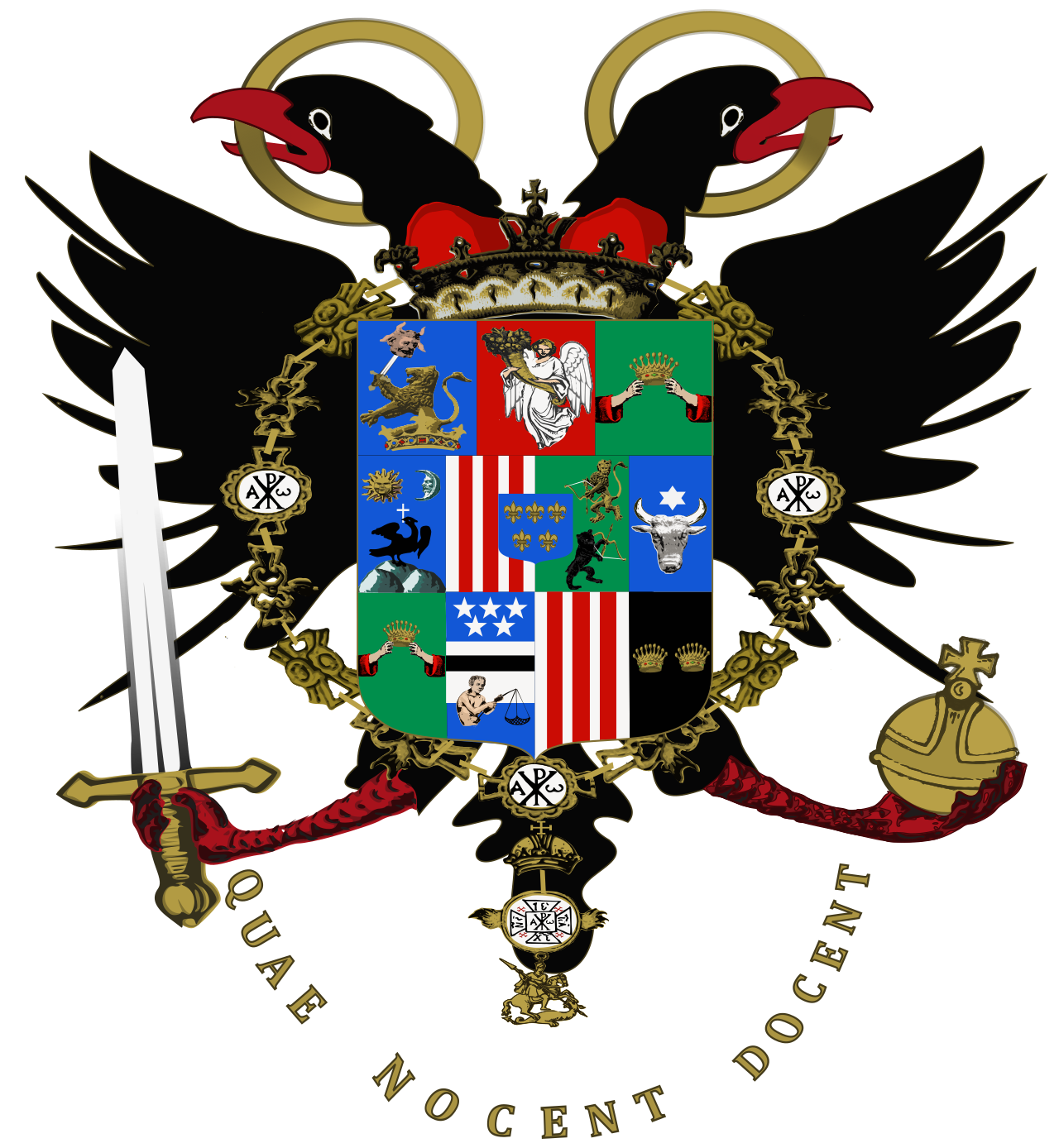
Quae nocent docentThat which harms us, teaches usThe Cantacuzène-Speransky Arms
D. Kamra
The Author
About D. Kamra
I have been an obsessive student of history and conflict for many years and have been writing for over a decade. My work is based on meticulous research, real characters, and actual events.
I attended Carleton University and Harvard. I was born in India, grew up in Canada, and currently live in Northern California.
I.
First Prize for Best Unpublished Fiction, Letter Review
II.
Shortlisted for Best Biographical Fiction, Historical Novel Society
III.
Top Pick for the Killer Nashville Claymore Award
· · ·
Stay in Touch
Join the Newsletter
For news about the book's release, behind-the-research stories, and the occasional dispatch from history's rabbit hole.
No spam. Unsubscribe any time.
Thank you. You've been added to the list. I'll be in touch.